
Home Page › Infrared heating panels. › Home Heating
Home Heating
Domestic home heating
Infrared heating panels are an ideal solution in the home environment, either when building a new home or replacing an old central heating system or as additional heating to a single room or living area. Building regulations now state you must use a Part P qualified electrician for domestic rewiring or electrical work in bathrooms, all good electricians should be registered and can provide you with a BS7671 certificate.
- Introduction
- Central heating
- Bathrooms
- Single room heater
- Home – initial costs
Introduction. Go to the shop for a 350w heater
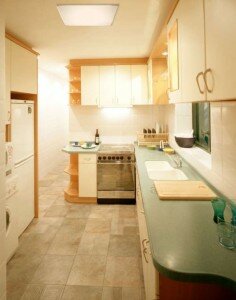 Home owners are becoming far more aware of energy usage, finding ways to reduce energy consumption and create a more efficient home, simple ideas like loft or wall insulation can produce some excellent savings.
Traditional methods of heating with boilers and radiators are expensive and time consuming to install, radiators are often fitted where it is most convenient for the plumber rather than considering the layout and furnishings of the room, and usually one single programmer will control the whole central heating system, so even if one room is in use the whole house must be heated, causing a huge waste in energy.
An awareness of energy efficiency has brought about changes in our thought processes and habits. Infrared heaters have been in use in Germany, Austria and The Netherlands for more than ten years, these countries have always been far more environmentally aware and ahead of others, this infrared technology is now widely available in the UK to home owners wishing to reduce their electricity consumption for domestic home heating.
Our standard white panels are ideally suited to homes, whether new build properties, retro fitting or extensions, the white colour is designed for use on domestic ceilings, the power levels are generally suitable for one panel per room of the house. Installation is required by a competent electrician who can fit the panels along with room thermostats or timers for even greater efficiency.
If you are renovating an older property with larger rooms, high ceilings or a damp problem please talk to us before ordering or position more smaller panels to best advantage, cold uninsulated properties will need more power to retain warmth, this applies to any heating method. A slim line heating panel can simply be plugged into the nearest socket for a temporary heating solution on chilly days when the log burner is not lit. Please order the feet from our webshop which will fit any smaller standard white heating panel.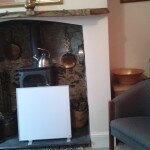
The standard design of our panels is a white finish made from a specially developed carbon fibre which will sustain high temperatures and is lightweight. Our new feature glass panels are slightly heavier, the highly polished surface and reflective quality provide a focal point on the wall.
Infrared heating firstly creates warmth on the skin, by stimulating the blood circulation the heat will permeate deeply around the body, body temperature is maintained by the insulating effect of the surrounding air. Heat can move around the body by encouraging optimum blood circulation for this reason infrared is the ideal choice for those sitting for long periods of time. Infrared also warms the very structure of the building, walls and objects are heated which in turn give off their own heat, providing long lasting warmth, homogenous atmosphere and therefore a healthier environment.
Central heating. Go to the shop for a 600w heater
Heating panels can be fitted to the ceiling or wall and hard wired to a room thermostat and programmer, modern programmers allow for different temperature set points throughout the day, a comfort setting during the day and higher warmth in the evening, helping to reduce unnecessary electrical consumption. Infrared heating panels also modulate, turning themselves on and off to maintain warmth and thus using a lower amount of electricity. Divide your home into zones, areas that need regular warmth and those that need occasional or reduced times of warmth, each zone will need a programmer. Zones not in regular use may simply be set to a lower temperature to reduce energy consumption. Infrared warmth can be felt on the skin. There is no need to have long warm up periods with infrared heating as it is warming you and not the air, if you walk into a cold room simply turn the panel on and you can feel the warming infrared rays on the skin even though the air temperature may still be low.
Bathrooms.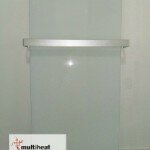
All our heating panels are IP44 rated for use in bathrooms, this means they are splash proof but as with most electrical items do not want to be getting really wet! Position in zone 3 away from direct water contact.
Infrared heating is excellent in bathrooms. It has two major benefits over traditional hot air heating, people are warmed directly and the walls/ objects are warmed to give a comfortable all round warmth and help prevent condensation.
If you position an infrared heating panel on the ceiling or on the wall in the bathroom you can feel the warmth directly on your body, this is particularly pleasant for those who like to take time in the bathroom, those with children or the elderly. When the heating is left on for longer periods prior to bathing it will warm the walls and furniture which then give off warmth to warm the air and create a cosy comfortable atmosphere, cold walls give a perceived feeling of cold and draughts. Bathroom condensation is due to hot moist air touching cold walls, this is reduced when infrared heating is allowed time to warm the walls prior to and after bathing. A simple room programmer and thermostat can control the heating efficiently to maintain a gentle background warmth without wasting electricity.
Mirror infrared heating panels are ideal in the bathroom as they do not mist up. We will be stocking towel rails that can be fitted onto 60cm width heating panels to make your heater functional too!
Single room heaters. Go to the shop for a 850w heater
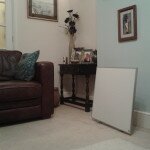 Full central heating provided by traditional radiators can be expensive to run especially when only one room is in use during the day, our infrared heating panels provide a smart and safe solution to warming one room. Infrared heating panels can be hung high on the wall like a picture and plugged into a wall socket, no small heaters or cables to trip over! We do suggest that the panel is securely fixed using the screws provided and the cable cut short to neatly fit to the closest plug socket, a simple timer will ensure the heating is turned on and off as necessary. The running cost for prolonged use is low due to the low energy consumption of our panels, please have a look at the comparisons on the How Much Does It Cost To Run? page.
Home – initial costs to purchase infrared heating panels
To supply panels to heat a modern three bedroom house could cost as little as £2700 and with a small additional cost for an electrician to fit and wire heaters to a central system and programmer this method of heating costs substantially less to install than conventional radiators and boilers.
| Area to heat | measurements | wattage required | cost to supply heater |
| Living area | 16 sq metres | 850 watt panel | £340 |
| Dining area | 12 sq metres | 600 watt panel | £275 |
| Kitchen | 12 sq metres | 600 watt panel | £275 |
| Cloakroom | 5 sq metres | 350 watt panel | £215 |
| Entrance hallway | 5 sq metres | 600 watt panel | £275 |
| Landing stairway | 5 sq metres | 350 watt panel | £215 |
| Bedroom 1 | 16 sq metres | 850 watt panel | £340 |
| Bedroom 2 | 14 sq metres | 600 watt panel | £275 |
| Bedroom 3 | 10 sq metres | 600 watt panel | £275 |
| Bathroom | 6 sq metres | 350 watt panel | £215 |
To heat this house requires 5.75 KW of electricity per hour, if we are paying 13p per unit per hour (this will depend on your tariff) then it will cost 75p per hour to initially heat the whole house and may be reduced to as little as 25p per hour to maintain warmth. Talk to your electrician about utilising a programmer and room thermostats to make even greater savings.
If you require ten panels or more talk to us about getting a discount!